The Quiet Quarter-Year: Inside the Unelected Machinery That Governs Washington Between Sessions
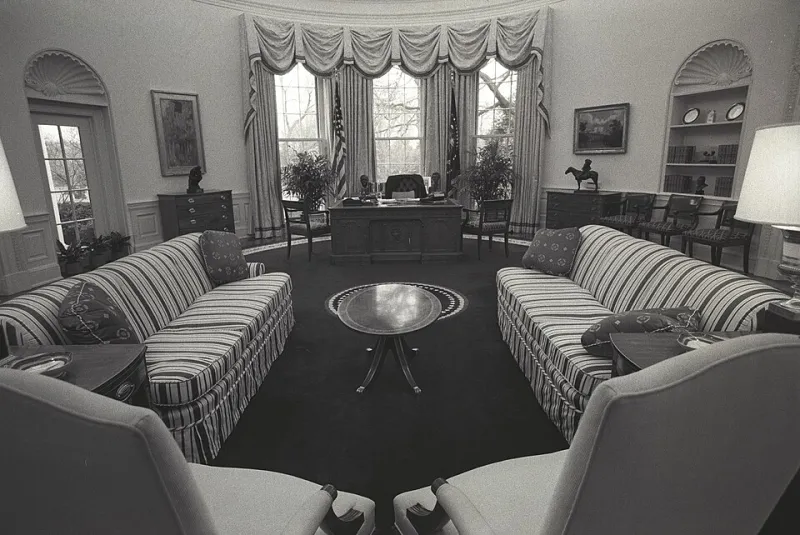
Photo: President (1993-2001 : Clinton). White House Photograph Office. 1/20/1993-1/20/2001, Public domain, via Wikimedia Commons
On a gray Tuesday morning in August, three employees of a mid-sized state agency gathered in a conference room in Tumwater to discuss a paragraph. The paragraph — a revision to how certain stormwater permits are reviewed — ran fewer than 200 words. No cameras were present. No lobby registers recorded who weighed in. Within months, that paragraph would carry the force of law for thousands of businesses and property owners across Washington.
Nobody in the Legislature voted on it. Nobody will.
The Session Ends. The Governing Doesn't.
Washington's citizen legislature meets for 105 days in even-numbered years and 60 in odd ones. The remaining 260 days belong to a parallel government: roughly two dozen executive agencies, hundreds of boards and commissions, and an alphabet soup of councils, panels, and advisory committees whose members are appointed rather than elected.
This is not a conspiracy. It is, in most respects, how modern states must function. Technical standards for drinking water, nurse staffing ratios, wildfire risk maps, and electric utility planning cannot wait for a session that convenes each January. Delegation is the price of a manageable legislative calendar.
But delegation has a consequence that rarely gets discussed: the center of gravity in state policymaking has shifted, quietly and permanently, toward people no voter chose.
Following One Rule Through the Machine
Consider the stormwater revision mentioned above. Its journey illustrates the standard route.
First came the trigger: a federal Clean Water Act requirement that the state update its permitting framework. No bill was filed; none was needed. The agency's own authority, granted by statute decades ago, sufficed.
Second, the drafting. Career staff — analysts, engineers, attorneys — produced the language. Interest groups were invited to comment during a public period that lasted a few weeks. Several did. Environmental organizations asked for stricter thresholds; a building industry association asked for flexibility. The final text split the difference in ways only a specialist would notice.
Third, adoption. The rule was filed with the state code reviser, and after a customary waiting period, it became enforceable. Inspectors began citing it. Compliance costs began accruing.
At no point did an elected official cast a vote. That is not a flaw in the process, exactly. But it is a fact about it — and one with real political weight.
Where Accountability Gets Thin
The reform era of the 1970s built an administrative state designed to insulate technical decisions from politics. Insulation, however, cuts both ways. The same structures that protect a water quality standard from a legislator's pet grievance also protect a dubious rule from public scrutiny.
Agency directors serve at the pleasure of the governor, a check that concentrates enormous informal power in one elected office. Boards and commissions often feature members whose terms long outlast the officials who appointed them. And the rulemaking dockets themselves — thousands of filings a year — receive coverage from a shrinking press corps that can no longer spare a reporter for the room in Tumwater.
What a More Visible Interim Would Look Like
None of this argues for paralysis. It argues for sunlight.
A consolidated, plain-language public register of proposed rules — with plain summaries of who bears the cost — would lower the barrier to participation that currently favors whoever can afford a lobbyist. Legislative oversight committees could hold interim hearings on major rules rather than reacting after the fact. Term limits and disclosure for commission appointees would make the appointments process something more than a reward system.
Washington prides itself on a tradition of accessible government, from initiative rights to open public meetings. That tradition means little if the most consequential decisions of the year happen in rooms the public doesn't know exist.
The paragraph adopted in August is now the law of the state. Most of the people it binds will never learn it existed until an inspector arrives.