Timber Towns and Talent Pools: Five Places Where Small-Town Washington Is Reinventing Self-Government
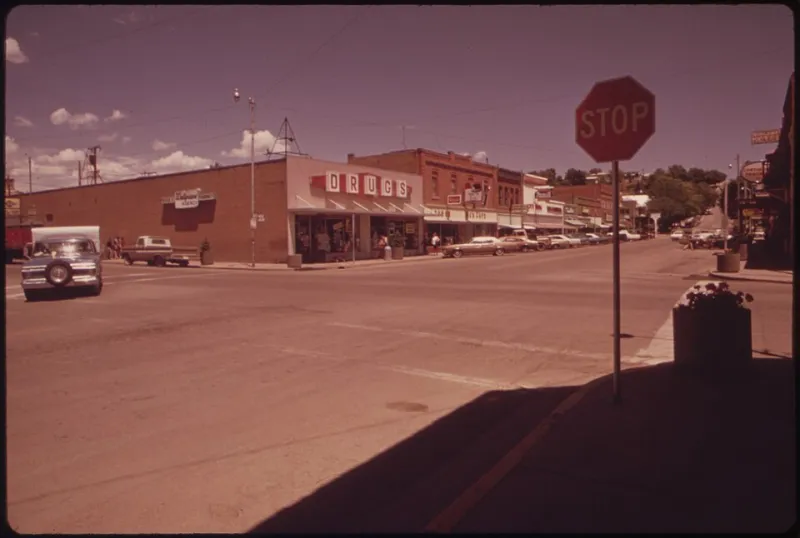
Photo: David Hiser, Public domain, via Wikimedia Commons
The national narrative about civic decline tends to be written in big cities, but some of the most interesting experiments in self-government are happening in towns of a few thousand people, where everyone knows the mayor and the stakes are concrete: a water system, a shuttered school, a Main Street that needs saving. Across Washington, small communities are improvising new ways to involve residents — with mixed, instructive results.
1. Participatory Budgeting in a Former Mill Town
When a Grays Harbor-area timber community found itself with a modest but meaningful windfall from timber and infrastructure receipts, council members did something unusual: they handed a slice of it to residents. Through a months-long process of neighborhood meetings and a public vote open to anyone over 16, residents chose street lighting and park repairs over a proposed marketing campaign. What worked: turnout among renters, not just homeowners. What flopped: the timeline — a one-year cycle proved too rushed, and the town has since moved to a two-year rhythm.
2. A Citizen Assembly East of the Cascades
Modeled loosely on the citizens' assemblies trialed in Ireland and Oregon, one Chelan County town convened a randomly selected panel of residents — stratified to reflect age and income — to advise on housing policy. The panel spent four weekends hearing from developers, farmers, and county planners before delivering recommendations the council adopted nearly wholesale. The lesson: sortition works when the question is narrow and the time commitment is paid. A first attempt collapsed when sessions were scheduled during harvest season.
3. The Town Hall That Went to the People
A Whitman County town of under a thousand residents, facing chronic no-quorum problems, replaced its traditional evening public comment period with rotating listening sessions held at the grange hall, the senior center, and — memorably — the grain co-op during harvest lunches. Comment volume tripled. The experiment cost almost nothing, which is precisely the point: most participation barriers are logistical, not philosophical.
4. Youth Seats With Actual Weight
Several small districts have experimented with student advisory positions, but one coastal town gave its youth representative a formal vote on the parks committee — including on the budget. Attendance among the town's teenagers rose noticeably; two former youth members later ran for council. The flop: an early version appointed students by essay contest, which produced a narrow, self-selecting pool. Elections at the high school worked better.
5. The Budget-in-Plain-Language Rule
A Klickitat County community, frustrated that budget hearings attracted only the usual three attendees, adopted a plain-language, one-page budget summary mailed to every household with the water bill, plus a tear-off comment form. Hearing attendance only rose modestly — but written comments quadrupled, and the council began citing them by name in deliberations. Sometimes the win isn't a packed room; it's the knowledge that people were actually reached.
What These Experiments Share
None of these towns had more money or expertise than their neighbors. What they had was a willingness to treat participation as something to be engineered — scheduled around harvests and shift work, translated into plain language, and given teeth. For communities wondering where to start, the cheapest lesson is also the most consistent one: meet people where they already are, and then actually do what they said.