Opinion: Stop Calling It 'Seattle Politics.' Washington's Divided Map Deserves Its Own Story.
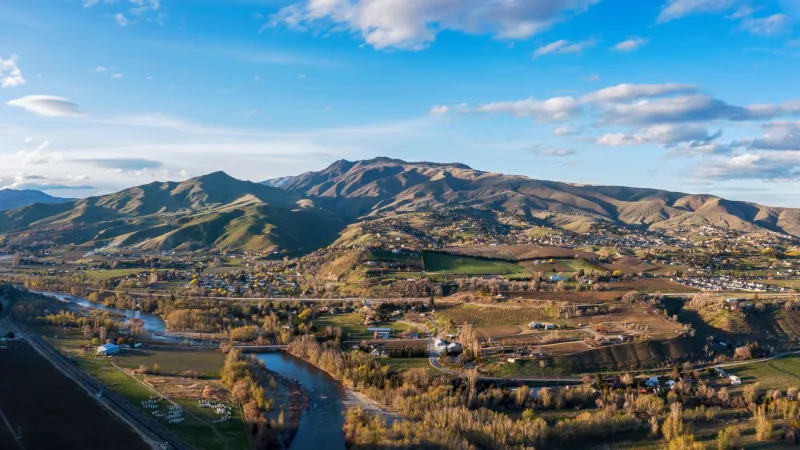
When a national outlet needs a one-line summary of Washington, it reaches for the same phrase: a deep-blue state dominated by Seattle. The shorthand is convenient, frequently repeated, and substantially wrong.
A State of Many Electorates
Consider the actual map. King County votes decisively Democratic, yes. But Spokane County has swung between parties in recent cycles. The Tri-Cities and much of the Columbia Basin remain reliably conservative. Grant and Adams counties are among the most Republican in the nation. Coastal timber towns, agricultural districts, and university communities each carry distinct political cultures that a Seattle-centric frame simply cannot register.
Washington's legislative landscape reflects this. Rural legislators of both parties routinely cross coalition lines on issues like water rights, agricultural labor, and broadband — alliances invisible to national commentary that treats the state as a single ideological bloc.
Why the Shorthand Does Damage
The 'Seattle politics' frame is not merely imprecise; it is corrosive. It tells residents east of the Cascades that their preferences are an afterthought, feeding the secessionist rhetoric that periodically resurfaces in the Legislature as proposals to split the state. It also gives Olympia's urban majority a reason to stop listening, and rural voters a reason to stop participating. Civic disengagement thrives on the belief that the outcome is preordained.
For journalists and advocates, the monolith narrative is a story-killer. It forecloses coverage of the cross-Cascade coalitions on farmworker housing, wildfire funding, and salmon recovery that actually move policy. If the only story is blue-versus-red, the complicated middle disappears.
What a Statewide Story Requires
A genuinely statewide civic ecosystem would look different. It would employ reporters based in Yakima, Wenatchee, and Walla Walla, not just stringers filing from afar. It would publish coverage that treats the Palouse with the same seriousness as Capitol Hill. It would measure the state not by its largest city but by its full range of communities — and hold every institution, including Seattle's, to account.
Washington is not a blue state with scenery. It is a contested, diverse republic of its own, and it deserves to be described that way. The first step is retiring a phrase that flatters one city while erasing everyone else.