Priced Out of Democracy: How Washington's Ballot Initiative Requirements Are Tilting the Playing Field Toward Wealthy Campaigns
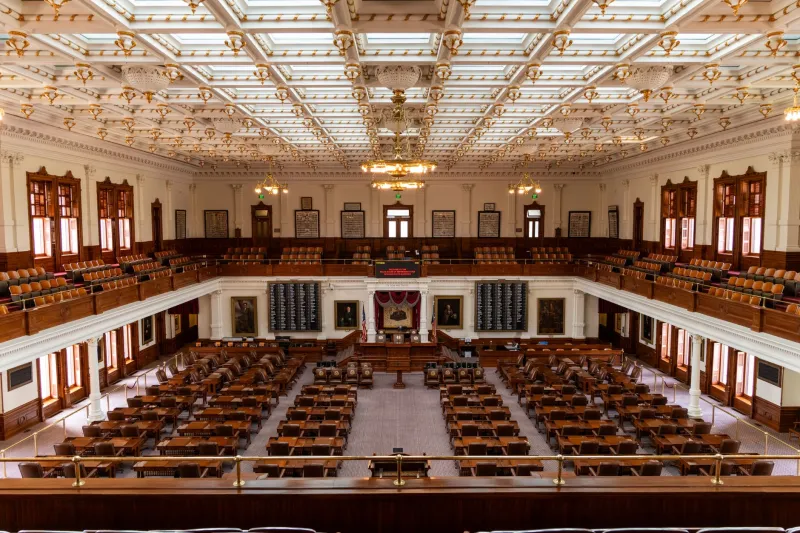
Photo: Patrucio, CC0, via Wikimedia Commons
Washington State's initiative process was enshrined in its constitution more than a century ago as a safeguard against legislative inaction — a mechanism by which ordinary residents could bypass a gridlocked statehouse and place questions directly before the electorate. The architects of that system could not have anticipated a world in which gathering signatures would become a professionalized, commodified industry, nor one in which the cost of qualifying a single measure might exceed the annual operating budget of most civic organizations in the state.
Today, that foundational instrument of participatory democracy is under quiet strain. The numbers tell a revealing story, and the patterns embedded within them raise serious questions about who the initiative process now truly serves.
The Arithmetic of Access
To qualify a statewide initiative in Washington, campaigns must collect valid signatures from registered voters equal to eight percent of the votes cast in the most recent gubernatorial election. For the 2024 cycle, that figure approached 325,000 signatures. Campaigns must accomplish this within a 180-day window — a timeline that sounds generous until one considers the logistical infrastructure required to sustain such an effort.
Professional signature-gathering firms, which deploy paid canvassers across high-traffic commercial corridors, charge between three and six dollars per verified signature depending on the complexity of the measure and the density of the target geography. A campaign aiming to collect signatures with a meaningful buffer against invalidation — standard practice, given that election officials routinely reject a portion of submitted signatures for technical reasons — should realistically budget between one and two million dollars for the qualification phase alone, before a single dollar is spent on advertising or voter persuasion.
For campaigns backed by industry coalitions, trade associations, or well-capitalized advocacy groups, this is a manageable line item. For a coalition of tenant advocates, environmental volunteers, or rural health workers operating on donated time and modest foundation grants, it is frequently an insurmountable barrier.
Who Makes the Ballot — and Who Doesn't
A review of initiative qualification attempts over the past six years in Washington illustrates the disparity with uncomfortable clarity. Measures backed by business coalitions opposing new labor regulations, technology companies seeking to shape data privacy law on favorable terms, and real estate interests seeking to limit local rent stabilization authority have consistently reached the ballot. Their campaigns were professionally managed, their canvassing operations well-funded, and their qualification timelines executed with precision.
Contrast that record with the experience of several grassroots campaigns during the same period. A coalition of disability rights advocates attempting to qualify a measure expanding Medicaid home care access fell more than 40,000 signatures short after exhausting its fundraising capacity. A network of rural school districts seeking a constitutional amendment to equalize education funding never advanced beyond the organizational phase, citing the financial impossibility of the qualification threshold. A farmworker rights initiative, despite generating genuine enthusiasm in agricultural communities across Eastern Washington, failed to secure sufficient signatures in the compressed window available to a largely volunteer operation.
The pattern is not absolute — some well-funded campaigns have also failed to qualify, and occasional grassroots measures have succeeded. But the directionality is consistent enough to warrant structural scrutiny.
The Signature-Gathering Industrial Complex
Underpinning this dynamic is an industry that has grown substantially in Washington over the past two decades. Signature-gathering firms maintain databases of high-traffic locations, employ experienced canvassers trained in rapid voter engagement, and operate with logistical sophistication that volunteer networks simply cannot replicate at scale.
There is nothing inherently improper about this industry's existence. Professionalized canvassing is legal, regulated, and in many respects efficient. The concern is not that paid signature gatherers are corrupt — it is that their services are priced in a manner that structurally advantages campaigns with corporate backing.
Some policy analysts have drawn comparisons to other states where the initiative threshold is calibrated differently. Oregon sets its statutory initiative threshold at six percent of votes cast in the last gubernatorial election, and its constitutional initiative threshold at eight percent — figures that translate to meaningfully different qualification costs given Oregon's smaller electorate. Colorado employs a tiered system that distinguishes between statutory and constitutional measures. California's process, while expensive, benefits from a vastly larger pool of potential volunteer signatories in dense urban centers.
Washington's combination of a relatively high percentage threshold, a fixed and non-extendable timeline, and a geographic distribution requirement that effectively demands a statewide canvassing operation creates a qualification gauntlet that is particularly punishing for resource-constrained campaigns.
The Reform Conversation
A small but growing number of civic organizations and election policy researchers in Washington have begun arguing publicly for threshold reform. Their proposals vary in scope and ambition.
The most modest suggestion involves reducing the signature requirement from eight percent to six percent of the gubernatorial vote — a change that would lower the qualification cost without fundamentally altering the initiative's structural character. Proponents argue this adjustment would bring Washington closer to the median among initiative states while preserving a meaningful qualification bar.
A more ambitious proposal would create a tiered threshold system in which statutory initiatives — those directing the legislature to enact or repeal specific laws — face a lower signature requirement than constitutional amendments. Advocates contend this distinction reflects the relative permanence and gravity of each category, and that statutory measures should be more accessible given that the legislature retains the ability to revisit them.
A third line of thinking focuses not on the threshold itself but on public financing for initiative qualification. Under such a model, campaigns demonstrating a minimum level of decentralized public support — measured, for instance, by the number of unique small donors — would become eligible for a state-administered canvassing subsidy. Supporters frame this as an extension of Washington's existing public campaign finance infrastructure into the direct democracy space.
Opponents of reform raise legitimate counterpoints. A lower threshold, they argue, risks cluttering the ballot with underdeveloped measures that have not demonstrated sufficient public support. The current requirement, defenders contend, functions as a meaningful quality filter — ensuring that only proposals with genuine, broad-based backing reach voters.
Democracy's Gatekeeping Problem
The debate over Washington's initiative threshold is, at its core, a debate about who gets to set the terms of democratic participation. The state's founders envisioned the initiative process as a populist corrective to legislative capture — a tool for the many, not the few. Whether that vision remains operative in an era of professionalized political campaigns and eight-figure ballot measure spending is a question that deserves far more public deliberation than it has received.
What the data makes difficult to dispute is that the current system, as structured, imposes costs that are not neutrally distributed. Organizations with corporate backing can absorb those costs as routine campaign expenses. Volunteer coalitions representing workers, tenants, rural communities, and marginalized populations frequently cannot.
If Washington's initiative process is to fulfill its democratic mandate, the conversation about who can afford to use it — and who cannot — must move from the margins of policy discussion to its center. The invisible veto operating at the qualification stage may be the most consequential electoral reform conversation the state is not yet having.