Decided Before Dawn: The Hidden Machinery That Shapes Washington's Legislative Primaries

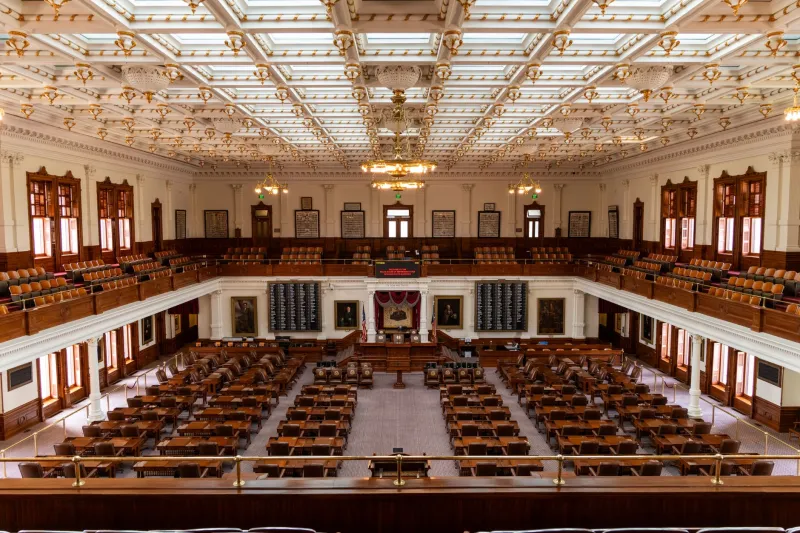
Photo: OceanLoop, CC BY-SA 4.0, via Wikimedia Commons
Every two years, Washington residents open their August primary ballots and encounter a familiar ritual: a list of names, a few candidate statements, and the reassuring sense that democratic choice is unfolding in real time. What that ballot rarely reveals is how thoroughly the field has already been curated — through months of backroom endorsements, donor alignment, and party gatekeeping that most voters never witness and many never know exists.
Political scientists call it the "invisible primary" — the pre-election competition among candidates for institutional support, financial backing, and organizational legitimacy. In presidential races, this phase plays out in public view, on cable news and in editorial pages. In Washington's legislative contests, it happens in living rooms, labor hall conference rooms, and the inboxes of a relatively small network of political insiders. By the time the August filing deadline closes, the outcome of most races is, in practical terms, already written.
The Endorsement Ecosystem
In Washington state, a handful of endorsements carry outsized weight in determining whether a legislative candidate is taken seriously. Labor unions — particularly the Washington State Labor Council and its affiliated trades — can confer not just credibility but field organizing capacity. Environmental groups like the Washington Conservation Voters maintain scorecards and endorsement processes that shape both donor behavior and media coverage. The Washington State Democratic Central Committee and its Republican counterpart offer party endorsements that signal to local activists which candidates deserve their volunteer hours.
For many first-time candidates, the endorsement circuit functions less like an open audition and more like a series of closed-door interviews with predetermined preferences. Incumbents, former staffers, and candidates with established relationships in the party infrastructure tend to move through this process with relative ease. Outsiders — particularly those without prior connections to union halls or advocacy organization leadership — often find the doors politely but firmly closed.
"I didn't know the landscape," said one candidate who ran unsuccessfully for a Puget Sound-area House seat in a recent cycle and asked not to be identified by name to protect ongoing professional relationships. "I went to every endorsement meeting I could find. But by the time I showed up, it felt like the decision had already been made. There was a preferred candidate, and the process was almost ceremonial."
Money Follows the Map
Endorsements matter in part because of what follows them: money. Washington's campaign finance system, while more transparent than many states, still allows substantial sums to flow rapidly to candidates who clear the institutional credibility threshold. Legislative caucus committees — the Democratic and Republican fundraising arms in both chambers — typically concentrate their financial support on a narrow tier of candidates deemed most competitive or most loyal to leadership priorities.
Analysis of Public Disclosure Commission filings from recent cycles reveals a consistent pattern: candidates who secure major institutional endorsements before the August primary receive a disproportionate share of late-cycle contributions, often in the weeks immediately following those endorsements. The correlation is not coincidental. Donors, particularly those writing checks above the four-figure threshold, routinely wait to see which candidates have been validated by the organizations they trust before committing funds.
This dynamic creates a self-reinforcing loop. Endorsed candidates attract money. Money funds field staff, mailers, and digital advertising. Better-resourced campaigns generate more media coverage and higher name recognition. By primary day, the structural advantages of pre-primary institutional support have compounded to a degree that most challengers cannot overcome — regardless of policy platform or constituent appeal.
Washington's Top-Two System: Openness With Limits
Washington operates under a top-two primary system, adopted by voters in 2004, in which all candidates regardless of party appear on a single ballot and the top two vote-getters advance to the general election. Proponents argued the system would reduce partisan extremism and expand voter choice. In practice, the top-two format has done little to disrupt the pre-primary sorting process.
Because legislative districts in Washington are frequently drawn to favor one party, the August primary in many seats effectively functions as the decisive election. A Democrat running in a safely blue district on the west side of the Cascades, or a Republican in a reliably red eastern Washington seat, needs only to survive the primary to be virtually guaranteed a seat in Olympia. That reality elevates the stakes of the invisible primary considerably: whoever wins the institutional backing contest in February or March has often already won the seat.
"The top-two was supposed to open things up," said a political science researcher at a Washington public university who studies state electoral systems. "And in genuinely competitive swing districts, it sometimes does. But in safe seats, all it means is that the party's preferred candidate gets ratified twice instead of once."
The Candidate Experience
For prospective candidates without prior political networks, the invisible primary presents barriers that are difficult to articulate and nearly impossible to formally challenge. Unlike ballot access rules or campaign finance limits, the informal gatekeeping of endorsement bodies and donor networks operates outside any regulatory framework. There is no appeals process, no transparency requirement, no obligation for an organization to explain why one candidate received its blessing and another did not.
Several current and former candidates interviewed for this article described a shared experience of encountering what one called "a wall made of relationships" — the accumulated social capital of candidates who had worked in legislative offices, led advocacy organizations, or spent years attending party precinct caucuses. Those relationships, built over time through institutional participation, translated directly into endorsement committee votes and donor phone calls.
Women and candidates of color described additional dimensions of this challenge. Multiple sources noted that endorsement committees — particularly in older, more established organizations — sometimes applied informal standards of "electability" that reflected assumptions about which candidates could win in particular districts. Those assumptions, they argued, often disadvantaged candidates who did not fit conventional political profiles, regardless of their substantive qualifications.
Reform Conversations and Their Limits
There is no shortage of ideas for making Washington's pre-primary landscape more equitable. Small-dollar matching programs, of the kind used in New York City and now under consideration in several states, could reduce the financial advantage of institutionally endorsed candidates by amplifying grassroots fundraising. Ranked-choice voting in primaries, piloted in some Washington jurisdictions for local races, could reduce the strategic incentive to consolidate early behind a single endorsed candidate.
But structural reform faces a fundamental obstacle: the organizations and individuals who benefit most from the current system are also among the most influential voices in shaping state election policy. Legislative leaders who rose through the existing endorsement ecosystem have limited incentive to dismantle the ladder they climbed. Major institutional endorsers — labor, environmental groups, business associations — value their gatekeeping role precisely because it gives them leverage over elected officials.
The result is a system that functions with considerable efficiency for those who know how to navigate it, and with considerable opacity for everyone else.
What Voters Deserve to Know
The invisible primary is not, in itself, a scandal. Political parties and advocacy organizations have legitimate interests in supporting candidates who share their values and are likely to be effective legislators. Donor networks and endorsement processes are legal, often transparent in their outcomes if not their deliberations, and represent a form of civic engagement in their own right.
What is worth examining, however, is the gap between Washington's self-image as a state with progressive democratic institutions and the reality of how legislative representation is actually determined. If the decisive competition for most legislative seats occurs among a narrow circle of political insiders months before ordinary voters engage, then the August primary ballot is less a moment of democratic choice than a ratification of decisions already made elsewhere.
For a state that prides itself on civic innovation — the top-two primary, vote-by-mail, robust disclosure laws — that gap deserves more than passing attention. Washington voters participate in good faith. They deserve a system that meets them with equal honesty about where power actually resides.