Hired Hands, Hollow Votes: How the Signature-for-Hire Industry Is Quietly Rewriting Washington's Initiative Process

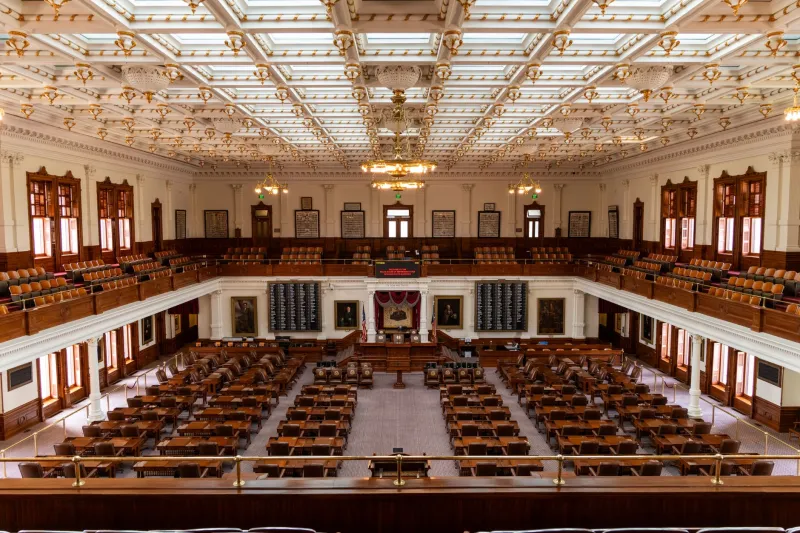
Photo: Thwaite, B. H. (Benjamin Howarth), No restrictions, via Wikimedia Commons
Washington State's initiative and referendum process was conceived as a corrective tool — a mechanism through which ordinary citizens, frustrated by legislative inaction or overreach, could bypass Olympia and write law directly. The framers of that system imagined neighbors gathering at kitchen tables, volunteers canvassing community centers, and civic energy translating organically into ballot access. What they did not imagine was a multimillion-dollar industry built around the mechanics of signature collection itself.
Today, that industry is not a footnote. It is the engine.
The Professionalization of a Civic Ritual
Across Washington, a network of paid signature-gathering firms operates with the precision and infrastructure of a mid-sized corporate enterprise. Companies recruit and deploy canvassers — often from out of state — to shopping center parking lots, transit hubs, and farmers markets. Workers are frequently compensated on a per-signature basis, a payment structure that critics argue creates incentives misaligned with genuine civic persuasion.
The going rate for a verified signature in Washington has climbed steadily in recent election cycles. Industry insiders acknowledge that running a credible statewide initiative campaign now requires a minimum budget in the hundreds of thousands of dollars just for the signature phase, before a single dollar is spent on voter outreach or advertising. For initiatives targeting contentious policy areas — tax reform, environmental regulation, gun measures — that floor rises considerably higher.
This financial reality creates what political scientists sometimes call a "democratic toll booth." The right to place a measure before voters is technically available to any citizen. In practice, it is available to any citizen who can either self-fund at scale or attract donors willing to underwrite a sophisticated commercial operation.
Who Gets Through the Gate
The consequences of this toll booth are not abstract. They are visible in the composition of Washington's recent initiative landscape.
Well-resourced interest groups — business coalitions, labor organizations, ideological advocacy networks with national backing — have demonstrated a consistent ability to navigate the signature threshold. Smaller, community-rooted campaigns frequently struggle. A neighborhood-level campaign organized around a genuinely local concern, staffed by volunteers with limited coordination capacity, faces structural disadvantages that no amount of civic passion easily overcomes.
Washington requires initiative sponsors to collect signatures equal to eight percent of the votes cast in the most recent gubernatorial election, a threshold that currently sits at roughly 324,000 valid signatures. Campaigns must reach that number within a defined window, accounting for the reality that a meaningful percentage of collected signatures will be invalidated during the Secretary of State's verification process. Experienced firms build in a buffer, targeting 20 to 30 percent above the minimum — a cushion that further inflates the financial requirement.
For a volunteer-driven campaign operating without professional infrastructure, that arithmetic is punishing. For a campaign backed by a well-capitalized advocacy organization, it is a manageable line item.
The Canvasser Economy
Behind the clipboards and folding tables is a workforce with its own economic pressures and ethical ambiguities. Paid signature gatherers occupy an unusual position: they are simultaneously civic participants and piece-rate workers whose income depends on volume rather than outcome.
Former canvassers interviewed by civic researchers and journalists in recent years have described environments in which supervisors emphasize speed and signature counts above substantive voter engagement. Training, they report, focuses on efficient script delivery and objection handling rather than on the policy merits of the measure being advanced. Some describe being deployed across multiple campaigns in rapid succession, gathering signatures for causes they have had little time to evaluate.
This dynamic raises questions that go beyond individual conduct. When the act of civic petition is performed by workers operating under production pressure, what is the epistemic value of the signatures collected? The legal answer is clear — a valid signature is a valid signature. The democratic answer is considerably murkier.
Reform Proposals on the Table
A growing chorus of good-government advocates in Washington has begun pushing for structural reforms to the initiative signature process. The proposals vary in scope and ambition, but several themes recur consistently.
One frequently discussed reform involves geographic distribution requirements — mandating that valid signatures reflect participation across a defined number of counties or legislative districts, rather than simply aggregating statewide. Proponents argue this would pressure campaigns to demonstrate genuine breadth of support rather than concentrating canvassing resources in high-density urban areas where per-signature efficiency is greatest. Critics counter that such requirements could disadvantage urban communities with legitimate grievances and disproportionately empower rural interests.
A second category of reform targets disclosure. Washington already requires campaign finance reporting for initiative committees, but advocates argue that the signature-gathering phase itself warrants greater transparency — including public reporting of payments to canvassing firms, the geographic distribution of collection activity, and the employment status of individual gatherers. Greater visibility, reformers contend, would at least allow voters to assess how a measure reached the ballot before deciding whether to support it.
A third approach, more radical in its implications, involves exploring publicly funded or state-supported infrastructure for qualifying initiatives — creating resources that volunteer-driven campaigns could access to level the playing field against commercially backed operations. This idea remains largely theoretical in Washington's current political environment, but it has gained traction in academic and civic engagement circles.
The Industry's Defense
Firms operating in the signature-gathering space push back on characterizations of their work as corrosive to democracy. Their argument is straightforward: Washington's initiative threshold is demanding by design, and professional services simply make it possible for campaigns to meet a rigorous standard. Without commercial infrastructure, they contend, many legitimate policy debates would never reach voters at all.
There is something to this argument. The initiative process was never premised on ease of access — the signature requirement exists precisely to filter out causes that lack meaningful public resonance. If professional canvassing enables more campaigns to clear that bar, one could argue that it expands rather than restricts democratic participation.
But this framing elides a critical distinction: between causes that lack public resonance and causes that simply lack financial backing. The signature-gathering industry does not amplify genuine popular will so much as it amplifies the will of those who can afford amplification. That is a meaningful difference, and one that Washington's civic infrastructure has yet to seriously grapple with.
What Authentic Looks Like
It is worth noting that volunteer-driven initiative campaigns do still succeed in Washington, though with decreasing frequency relative to commercially backed efforts. When they do, they tend to share certain characteristics: an issue with visceral, immediate resonance for a large population; an existing organizational network — a union, a faith community, a professional association — that can be mobilized for outreach; and a timeline that allows for sustained, patient coalition-building rather than compressed commercial deployment.
Those conditions are replicable, but they are not the norm. For most causes, the path to the ballot now runs through a vendor relationship rather than a volunteer network. That shift may be irreversible without deliberate policy intervention.
Washington's initiative process remains one of the state's most powerful instruments of popular governance. Whether it continues to function as a genuine expression of citizen will — or increasingly as a marketplace where ballot access is purchased rather than earned — depends in large part on decisions that Olympia and the broader civic community have yet to make with any urgency. The question deserves more attention than it has received.