Dollars at the Door: How Washington's Ballot Initiative Process Became a Playground for Deep-Pocketed Interests
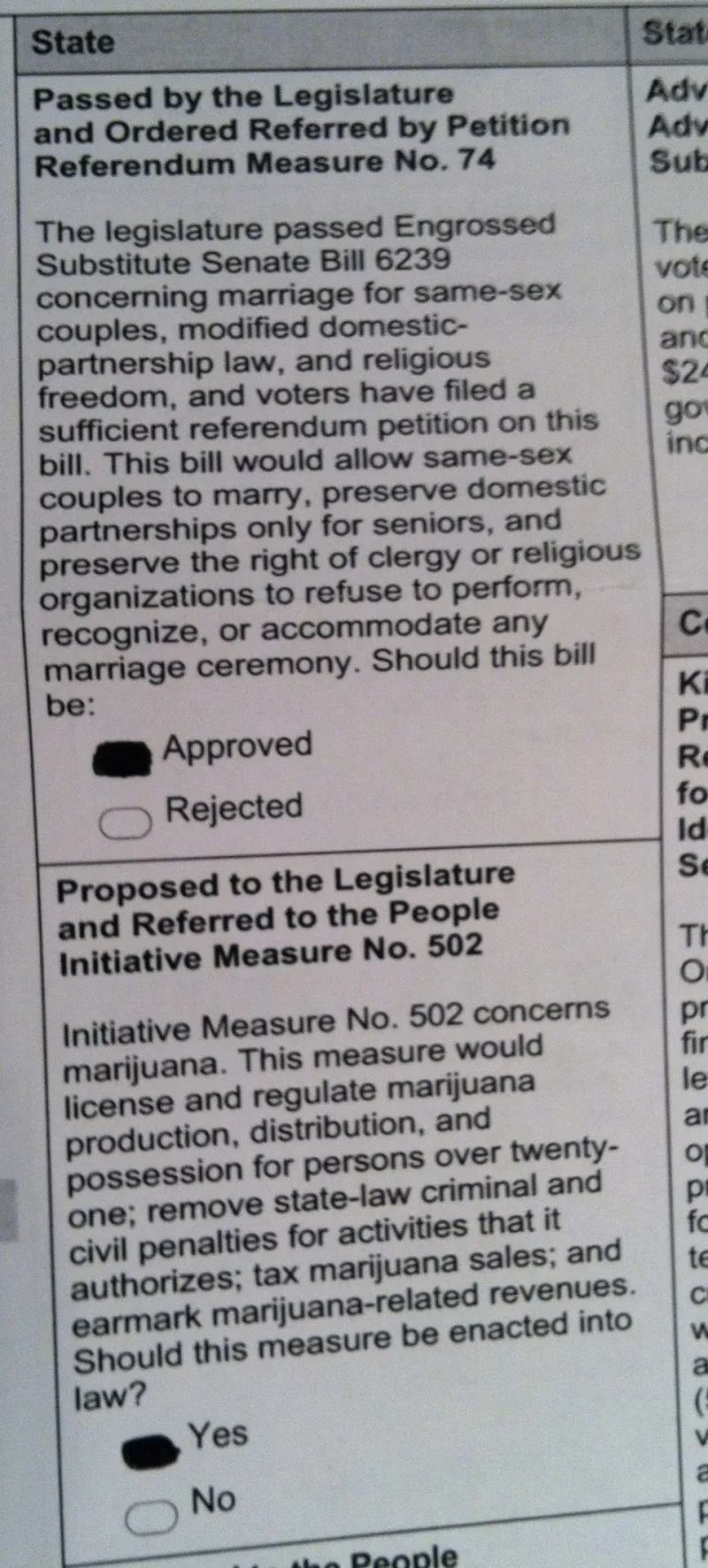
Photo: erocsid, CC BY 2.0, via Wikimedia Commons
Washington State's initiative and referendum process occupies a near-sacred place in the state's civic mythology. Adopted in 1912 during the Progressive Era, it was conceived as a check on a legislature that reformers feared had grown too cozy with railroad barons and industrial monopolies. More than a century later, the irony is difficult to ignore: the very mechanism designed to break the grip of concentrated wealth has, in many respects, been captured by it.
Across recent election cycles, a pattern has emerged that political scientists, campaign finance watchdogs, and grassroots organizers describe with growing alarm. The ballot initiative process — formally open to any Washington resident willing to gather signatures and submit a measure — has become, in practical terms, a tool available primarily to those with access to substantial capital. The result is a system that retains the aesthetic of populism while increasingly delivering outcomes shaped by the priorities of corporations, wealthy individuals, and ideologically driven outside groups.
The Price of Getting on the Ballot
The first barrier is purely financial. To qualify a statewide initiative for Washington's ballot, organizers must collect valid signatures from registered voters equal to eight percent of the votes cast in the last gubernatorial election. In recent cycles, that threshold has exceeded 300,000 signatures. Gathering that many verified signatures within the legally mandated 180-day window is, as a practical matter, impossible without paid signature gatherers.
Professional signature-gathering firms operating in Washington typically charge between $8 and $14 per verified signature, depending on the complexity of the measure and the competitiveness of the labor market for canvassers. A back-of-the-envelope calculation places the cost of simply qualifying a measure — before a single campaign advertisement is purchased — at somewhere between $2.5 million and $4.5 million. That figure alone disqualifies the vast majority of authentic grassroots efforts before the campaign has formally begun.
Campaign finance disclosures filed with the Washington Public Disclosure Commission (PDC) illustrate the gap in stark terms. Several of the initiatives that appeared on Washington ballots in 2023 and 2024 were bankrolled almost entirely by a small cluster of donors. In one notable instance, a single out-of-state technology executive contributed more than $3 million to a campaign that publicly styled itself as a citizen-led movement. Volunteers were featured prominently in the campaign's advertising; the signature-gathering operation was entirely contracted.
Manufacturing the Appearance of Consensus
The signature phase is only the beginning. Once a measure qualifies, the campaign to win voter approval demands resources of an entirely different order. Polling, media production, digital advertising, direct mail, and field operations in a state as geographically and demographically diverse as Washington routinely cost tens of millions of dollars for a contested statewide initiative.
Well-resourced campaigns have developed sophisticated methods for framing measures in ways that obscure their structural beneficiaries. Initiatives that deliver substantial tax advantages to large corporations are packaged as small-business relief. Measures that weaken environmental regulations are marketed as cost-of-living solutions. The language submitted to voters is crafted not by the communities most affected by the policy in question, but by communications consultants retained specifically to maximize approval ratings among swing voter demographics.
Washington Policy Watch, a nonpartisan research collaborative, analyzed the plain-language summaries and official ballot titles of twelve initiative campaigns over a six-year period and found that, in nine cases, independent policy analysts assessed the actual fiscal or regulatory impact of the measure to be materially different from the impression conveyed by the campaign's public messaging. Voters, in other words, were frequently approving something other than what they believed they were approving.
Grassroots Groups Are Being Priced Out
The consequences for authentic citizen-led advocacy are concrete. Organizers working on issues ranging from tenant protections to Indigenous water rights to public transit funding have repeatedly concluded that the initiative process is not a viable avenue for their policy goals — not because their proposals lack public support, but because they cannot compete financially with the opposition campaigns that well-funded interests can mobilize.
"We had polling showing sixty-two percent support for our measure in concept," said one Seattle-based housing advocate who asked not to be named due to ongoing negotiations with state legislators. "But we knew that the moment we filed, the other side would spend whatever it took to move those numbers. We didn't have the resources to sustain a counter-campaign. So we didn't file."
This dynamic creates what researchers call an asymmetric veto: wealthy interests need not win every initiative campaign to exercise decisive power over the process. They need only credibly threaten the financial cost of opposition, which is often sufficient to deter underfunded campaigns from qualifying measures in the first place. The invisible veto is exercised long before Election Day.
Reform Proposals and Their Limits
A number of reform proposals have circulated in Olympia and in civic advocacy circles. Some reformers have called for a publicly funded signature-gathering option, modeled loosely on programs in other states, that would allow certified grassroots campaigns to access state resources for petition drives. Others have proposed stricter disclosure requirements for initiative funders, including mandatory real-time reporting of contributions above a certain threshold.
The Washington PDC has, in recent years, expanded its digital disclosure infrastructure, making it easier for journalists and researchers to track campaign finance flows. That transparency is meaningful, but disclosure alone does not alter the underlying economics. Knowing that a measure was funded primarily by a single billionaire does not change the fact that the measure may still pass — particularly if the campaign has effectively shaped the public's understanding of what the measure does.
Legislative referrals — measures referred to voters directly by the legislature — present a somewhat different dynamic, since they bypass the signature-gathering phase entirely. But they introduce their own concerns about whether the legislature itself is responsive to ordinary constituents or to the same donor class that funds initiative campaigns.
A System Worth Reexamining
None of this is to suggest that Washington's initiative process produces exclusively bad policy, or that every well-funded campaign is advancing a harmful agenda. The system has, at various points in the state's history, delivered genuinely consequential reforms that the legislature was unwilling to enact. The argument is not that direct democracy is broken beyond repair, but that the gap between the system's founding ideals and its current operational reality deserves honest examination.
Washington's voters deserve to know, in clear and unambiguous terms, who is funding the campaigns asking for their support — and what those campaigns stand to gain. They deserve a process in which the barriers to participation are low enough that a coalition of renters, farmworkers, or rural school parents can realistically place a measure before their fellow citizens without first assembling a multimillion-dollar war chest.
The initiative process was built to give citizens a check on concentrated power. Restoring it to that purpose will require confronting the concentrated power that now runs it.