Justice by Zip Code: Washington's Rural Public Defender Crisis Is Breaking the Sixth Amendment's Promise

Photo by Photo by David Lang on Unsplash on Unsplash
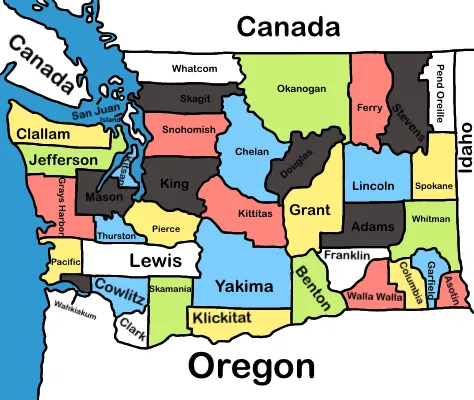
In Okanogan County, a public defender recently carried a caseload exceeding 400 active clients simultaneously. In Ferry County, a single attorney serves as the entirety of the public defense function for a jurisdiction spanning nearly 2,300 square miles. In Grays Harbor, defendants charged with serious felonies have waited upward of eight months before receiving meaningful legal counsel. These are not anomalies. They are symptoms of a structural failure that has been building for years across Washington's rural and mid-sized counties — one that legal scholars, sitting judges, and former public defenders describe in near-identical terms: a slow-motion constitutional crisis.
The Sixth Amendment to the United States Constitution guarantees every person accused of a crime the right to effective legal representation. In Washington State, that obligation falls primarily on county governments, which fund and administer public defender offices with varying degrees of commitment and competence. The disparity between what the law requires and what rural counties are actually delivering has grown so pronounced that it now constitutes, in the view of several legal experts, a systemic violation of defendants' rights.
The Numbers Behind the Crisis
Washington's Office of Public Defense has published caseload standards for years. Under those guidelines, a full-time public defender handling felony cases should carry no more than 150 cases annually. Misdemeanor caseloads carry a separate cap. In practice, attorneys in counties such as Chelan, Klickitat, and Stevens routinely carry two to three times those figures — and in some documented instances, the ratio climbs even higher.
The consequences are not abstract. When an attorney is managing 300 or 400 cases, the time available for each client collapses to minutes per week. Investigators are not hired. Expert witnesses are not retained. Plea agreements are accepted not because they represent the best outcome for the client, but because there is simply no bandwidth to mount a defense. Critics argue that this dynamic functions as a covert pressure mechanism — one that produces guilty pleas from defendants who might, under adequately resourced representation, have secured dismissals or acquittals.
"What you're seeing in these counties is not a justice system," said one former public defender who worked in Eastern Washington for six years before transitioning to private practice in Seattle. "It's a processing system. The constitutional trappings are present, but the substance has been hollowed out."
Why Rural Counties Can't Compete
The staffing crisis has multiple, overlapping causes — and none of them are easily resolved.
First, there is the compensation gap. Public defenders in rural Washington counties earn salaries that frequently trail their counterparts in King, Pierce, and Snohomish counties by 30 to 50 percent. Simultaneously, private defense attorneys in mid-sized markets such as Yakima or Wenatchee can earn two to three times what a county public defender position offers. For a law school graduate carrying an average of $130,000 in student debt — a figure consistent with national data — the calculus is unforgiving.
Second, there is the geographic isolation factor. Rural postings require attorneys to handle a far broader range of case types than urban specialists typically encounter. A public defender in Lincoln County may be expected to litigate DUI cases, domestic violence charges, serious felonies, and juvenile matters — often in the same week. The professional development infrastructure, mentorship networks, and collegial support that exist in larger offices are largely absent. Burnout rates are correspondingly elevated.
Third, and perhaps most consequentially, rural counties have historically lacked the political constituency to compel reform. The populations most affected by public defender shortages — low-income defendants, individuals with substance use disorders, people cycling through the criminal legal system — are among the least politically organized and least likely to vote in local elections. County commissioners, who control public defense budgets, face little electoral pressure to prioritize the issue.
A Two-Tiered System in Plain Sight
The inequity is not invisible to those within the legal community. Several Washington State Superior Court judges have, on the record, expressed concern about the conditions under which public defenders in their jurisdictions are operating. At least one county has faced formal complaints filed with the Washington State Bar Association over systemic failures in public defense delivery.
What makes the situation particularly acute is its intersection with pretrial detention. When defendants cannot access timely representation, bail hearings are delayed, motions are not filed, and individuals who have not been convicted of anything spend weeks or months in county jails — often losing employment, housing, and family stability in the process. The downstream costs of that incarceration fall, in turn, on the same county budgets that refused to adequately fund public defense in the first place.
Legal advocates point to a 2023 report from the Washington State Bar Association's Council on Public Defense, which documented persistent caseload violations across multiple rural jurisdictions and called for state-level intervention. That report has not, as of this writing, produced legislative action commensurate with its findings.
What Reform Could Look Like
Several reform pathways have been proposed, though none has yet achieved traction in the state Legislature.
One model, advanced by public defense advocates, would shift a meaningful portion of public defense funding from counties to the state — mirroring how Washington funds public education. Proponents argue that this would reduce the current disparity between wealthy and low-revenue counties and establish a uniform floor of service quality. Opponents, including some county officials, contend that such a shift would erode local control and create administrative complexity.
A second approach involves imposing enforceable caseload caps with real consequences for noncompliance — moving beyond the current advisory standards, which counties can and do ignore without penalty. Under such a regime, cases would be dismissed if a defendant could not be assigned competent counsel within a defined timeframe. Advocates acknowledge that this approach creates short-term disruption but argue that it would force counties to treat public defense as a genuine budgetary priority rather than an afterthought.
A third, more immediate intervention involves loan forgiveness programs specifically targeted at attorneys who commit to rural public defense positions for a defined period. Washington's existing loan repayment programs for public interest lawyers are modestly funded and have not been calibrated to address the rural recruitment gap.
The Broader Democratic Stakes
The public defender crisis is, at its core, a civic equity issue — and one with direct implications for Washington's democratic institutions. A legal system that delivers substantively different outcomes based on geography does not merely harm individual defendants. It erodes public confidence in the legitimacy of the courts, reinforces the perception that justice is a commodity available only to those with resources, and concentrates the burden of systemic failure on communities that already face significant economic and social disadvantages.
Washington has, in recent years, made meaningful investments in criminal justice reform — from sentencing revisions to diversion programs to behavioral health infrastructure. Those investments are undermined when the foundational guarantee of effective legal representation remains unmet for tens of thousands of residents in the state's rural counties.
The question before state lawmakers, county commissioners, and Washington's legal community is not whether the problem exists. The documentation is extensive and the testimony is unambiguous. The question is whether the political will exists to treat a constitutional obligation as something more than a line item to be minimized.