Cameras Without Consent: The Quiet Spread of Police Surveillance Technology Across Washington's Cities
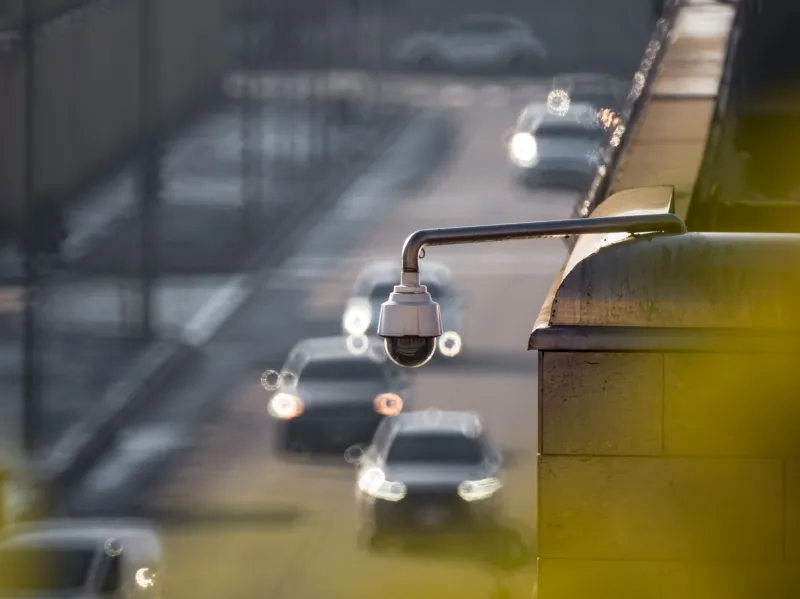
In the spring of a recent budget cycle, a mid-sized Washington city quietly approved the installation of forty-seven new fixed surveillance cameras across three residential neighborhoods. The approval appeared as a line item in a departmental equipment budget, described in summary documents as "public safety infrastructure improvements." No public hearing was held. No community meeting was convened. A civil liberties attorney who later reviewed the records noted that the agenda item received less floor discussion than a proposal to repaint crosswalks.
This is not an anomaly. Across Washington state, from Spokane to Tacoma to a growing number of smaller municipalities in between, police departments are acquiring and deploying surveillance technology — cameras, automated license plate readers, facial recognition pilots, and algorithmic risk-assessment tools — through procurement pathways deliberately or incidentally designed to avoid the scrutiny that public hearings generate. The cumulative effect is a surveillance infrastructure whose full scope no single government body can describe with precision, and whose deployment patterns raise serious questions about equity and constitutional accountability.
The Procurement Pathways That Bypass Deliberation
Surveillance technology enters Washington police departments through several channels, each of which carries its own accountability gap. Direct budget appropriations, even when they do appear before city councils, are typically embedded within broader public safety line items that receive minimal individual scrutiny. Equipment donation programs — through which technology companies provide hardware at no cost in exchange for data-sharing arrangements or favorable procurement positioning — require even less formal approval in many jurisdictions.
Federal grant programs, including Department of Homeland Security funds and Justice Assistance Grants, have historically required few conditions regarding community notification or civil liberties review. Washington cities have used these funds to acquire license plate reader networks, drone fleets, and real-time crime center infrastructure without triggering any local public process. In several documented cases, the existence of the technology was disclosed only after journalists or advocacy groups submitted public records requests.
The state legislature has not established a comprehensive framework governing local surveillance technology acquisition. A 2021 bill that would have required public notice and council approval before deployment of specified technologies passed the House but stalled in the Senate. Without statewide standards, cities operate under widely varying local ordinances — or none at all.
Where the Cameras Point
The geographic distribution of surveillance infrastructure in Washington cities is not random. Analysis of public records obtained from multiple municipalities reveals consistent patterns: fixed cameras and license plate readers are deployed at higher densities in lower-income neighborhoods and communities of color, while comparable areas in wealthier, predominantly white districts receive significantly less coverage.
Police departments offer operational rationales for these patterns — higher crime rates, greater pedestrian density, proximity to transit corridors — but civil liberties advocates argue that the metrics used to justify deployment themselves reflect historical enforcement disparities. Neighborhoods that were over-policed in previous decades generated arrest and incident data that now drives algorithmic deployment recommendations, creating a feedback loop in which surveillance infrastructure concentrates where surveillance has always concentrated.
In Tacoma, community organizers have documented that license plate readers are installed at nearly every arterial exit point from the Hilltop neighborhood — a predominantly Black community with a long history of intensive policing — while comparable coverage does not exist in adjacent neighborhoods with different demographic profiles. The department has described the deployment as operationally driven. Residents describe it as familiar.
Predictive Tools and Opaque Accountability
Beyond cameras and plate readers, several Washington law enforcement agencies have piloted or adopted predictive and algorithmic tools — software that analyzes historical crime data to forecast where incidents are likely to occur or to generate risk scores associated with individuals. These tools carry a distinct set of concerns because their decision logic is often proprietary, their accuracy claims difficult to independently verify, and their disparate impact on communities of color well-documented in peer-reviewed research.
Spokane's police department has used a social network analysis tool that maps relationships between individuals based on arrest history and associational data. Critics have raised concerns about the accuracy of the relational data and the potential for the tool to implicate individuals who have no criminal history through their proximity to others who do. Department officials have described the tool as one input among many, used by trained analysts rather than as an automated decision-maker. Independent audits of its outputs have not been made public.
Washington's Public Records Act provides a partial mechanism for scrutinizing these deployments, but its effectiveness is limited. Agencies frequently invoke law enforcement exemptions to withhold operational details, and the technical complexity of the systems involved makes meaningful public evaluation difficult even when records are disclosed.
The Civic Infrastructure That Should Be Asking Questions
The expansion of police surveillance technology is precisely the kind of consequential policy decision that representative democracy is designed to surface and deliberate. City councils exist, in part, to translate community values into operational constraints on government power. Civil liberties commissions, where they exist, are charged with identifying constitutional exposure before it becomes litigation. Community oversight boards, increasingly common in Washington cities following the reforms of recent years, are supposed to provide a structured channel for resident concerns about police practice.
In practice, most of these institutions are encountering surveillance technology after the fact — reviewing deployments that are already operational, auditing contracts already signed, and attempting to establish retroactive oversight frameworks for infrastructure already embedded in department operations. The sequencing is backwards, and it reflects a broader pattern in which the pace of technology adoption consistently outstrips the pace of democratic deliberation.
Some Washington cities have begun to close this gap. Seattle adopted a surveillance technology ordinance in 2018 that requires council approval before deployment of specified tools, mandates privacy impact assessments, and establishes ongoing reporting requirements. The ordinance has not prevented controversy — its implementation has been contested and its scope disputed — but it represents a structural commitment to public deliberation that most Washington municipalities have not replicated.
Reclaiming the Deliberative Process
The question facing Washington communities is not whether surveillance technology has any legitimate role in public safety. Reasonable people disagree about that, and the disagreement is precisely why democratic deliberation is necessary. The question is whether residents will have a meaningful opportunity to participate in decisions that directly affect their privacy, their freedom of movement, and the character of their neighborhoods — before those decisions are made, not after.
Building that opportunity requires more than goodwill from individual police chiefs or city managers. It requires statewide legislation establishing minimum procedural standards for surveillance technology acquisition, independent technical capacity within oversight bodies, and a public records environment that makes proactive disclosure the default rather than the exception.
Until those structures exist, Washington's surveillance infrastructure will continue to expand in the quiet spaces between budget cycles — installed before the public knows to object, and justified after the fact with rationales that were never publicly tested.