After the Gavel Falls: How Former Washington Lawmakers Are Cashing In on Capitol Access
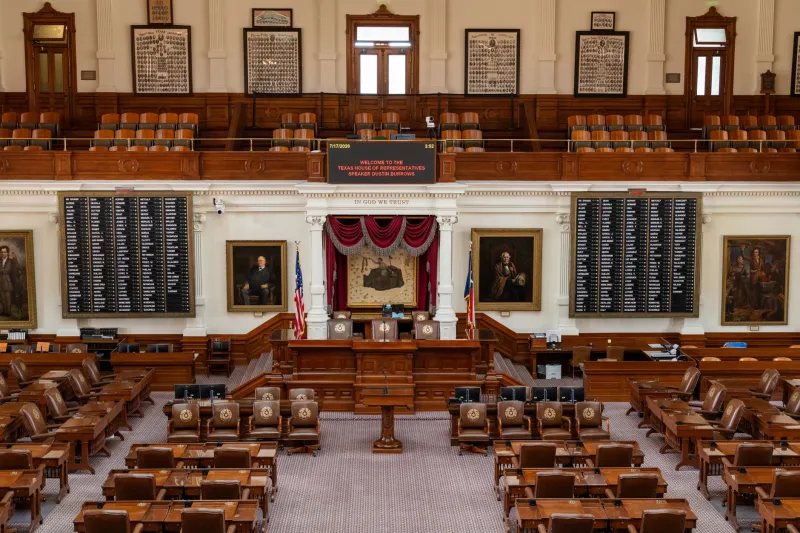
In Olympia, institutional knowledge is currency. Knowing which committee chair controls a bill's fate, which staff member drafts the language that matters, and which informal handshake precedes a floor vote—these are not skills taught in graduate school. They are acquired over years of service inside the Washington State Legislature. And when a legislator walks out of the Capitol for the last time, that currency does not expire.
What happens next, for a growing number of former lawmakers, is a relatively seamless transition into lobbying, government affairs consulting, or leadership roles within advocacy organizations whose policy interests overlap substantially with their legislative portfolios. The question that Washington's ethics infrastructure has yet to answer conclusively is whether this represents a meritocratic labor market at work or a structural arrangement that quietly skews democratic representation.
The Numbers Behind the Pattern
A review of Washington State Public Disclosure Commission (PDC) filings from the past decade reveals a consistent trend: a significant share of legislators who leave office—whether through electoral defeat, retirement, or voluntary departure—register as lobbyists or assume government relations roles within 24 months of their final session. While Washington law imposes a one-year cooling-off period prohibiting former legislators from lobbying their immediate former chamber, the restriction applies narrowly. Former House members may lobby the Senate on day one; former senators may do the same in reverse.
That structural gap is not incidental. It is, critics argue, a well-understood feature of the transition pipeline. A former lawmaker with deep relationships across both chambers, knowledge of procedural leverage points, and a reputation built over multiple terms does not need to lobby their own former colleagues directly to be valuable to a client. The access, in many cases, is ambient.
Between 2014 and 2024, at least three dozen former Washington legislators have appeared in PDC lobbying registrations within two years of leaving office. Their clients span healthcare systems, energy utilities, real estate development firms, technology companies, and agricultural interests—sectors that, in each case, align with the committee assignments and legislative histories of the individuals involved.
Voting Patterns and the Question of Anticipatory Alignment
Perhaps the most difficult dimension of this issue to quantify—and the most consequential—is whether the prospect of post-legislative employment subtly shapes legislative behavior before a lawmaker ever makes a career move. Political scientists refer to this dynamic as "anticipatory alignment": the tendency of officials to moderate or adjust their positions in ways that preserve future professional options.
In Washington's context, this is difficult to prove and nearly impossible to prosecute. But a close reading of roll-call votes in the final sessions of several legislators who subsequently entered lobbying roles for specific industries reveals, in select cases, a softening of previously held positions or a pattern of abstention on contested measures. Correlation is not causation, and legislative behavior is shaped by many variables. Nevertheless, the pattern warrants scrutiny that Washington's current disclosure framework does not systematically provide.
The Ethics Framework and Its Limits
Washington's Legislative Ethics Board oversees conduct standards for sitting legislators, and the PDC manages post-service registration requirements. But neither body is structurally equipped to evaluate the more diffuse question of whether the revolving door, in aggregate, distorts policy outcomes.
The one-year cooling-off period, by most assessments, functions more as a procedural formality than a substantive barrier. Former lawmakers with years of relationship capital do not require a formal lobbying registration to influence a bill's trajectory. A phone call, a lunch meeting, or a recommendation to a current colleague from a trusted predecessor carries weight that no registration requirement captures.
Several states have experimented with longer cooling-off periods—two years in some cases, extending to both chambers—and stricter definitions of what constitutes lobbying activity. Washington has not moved in that direction, in part because the legislators who would draft such reforms are themselves potential future beneficiaries of the existing arrangement.
Who Benefits, and Who Doesn't Have a Seat
The revolving door is not inherently corrupt. Experienced former legislators bring genuine expertise to the organizations and industries they serve. Policy is complex, and those who have navigated it firsthand offer value that is difficult to replicate.
But the access economy is not neutral in its distribution. Well-funded industries—healthcare, energy, real estate, technology—can afford to hire former legislators as advisors and lobbyists. Community organizations, tenant advocacy groups, rural service providers, and small-business coalitions generally cannot. The result is an asymmetry in institutional access that compounds over legislative cycles, as the voices best positioned to be heard in Olympia are those backed by clients with the resources to purchase proximity.
This dynamic does not require bad faith from any individual participant to produce a structurally skewed outcome. It requires only that the incentive architecture remain unchanged.
What Reform Could Look Like
Policy advocates who have studied the issue point to several potential interventions. Extending the cooling-off period to two years for both chambers would reduce the immediacy of the transition pipeline. Broadening the definition of lobbying to include informal advisory roles and strategic consulting on legislative matters—regardless of whether the individual formally registers—would close a significant gap in current disclosure requirements.
Full financial disclosure of post-service employment contracts, including compensation structures tied to legislative outcomes, would provide voters and researchers with data currently unavailable. And public financing mechanisms for legislative campaigns could reduce the degree to which industry relationships are cultivated during a lawmaker's tenure as a precondition for post-service employment.
None of these reforms is imminent. Most would require the Legislature to act against its own institutional interests—a high bar in any political environment.
A Question of Democratic Architecture
The revolving door in Washington state is not a scandal in the conventional sense. There are no envelopes of cash, no quid pro quo arrangements that prosecutors are investigating. What exists instead is a career pipeline so normalized, so embedded in the professional culture of Olympia, that it rarely registers as a structural problem at all.
That normalization may be the most significant obstacle to reform. When a pattern becomes unremarkable, the political will to examine it tends to dissipate. Washington's voters, however, retain the capacity to ask a straightforward question: when a former legislator returns to the Capitol as a paid advocate for a private interest, whose voice does that amplify—and whose does it quietly displace?