Green Dreams, Red Tape: How Washington's Permitting Maze Is Stalling Its Own Clean Energy Future
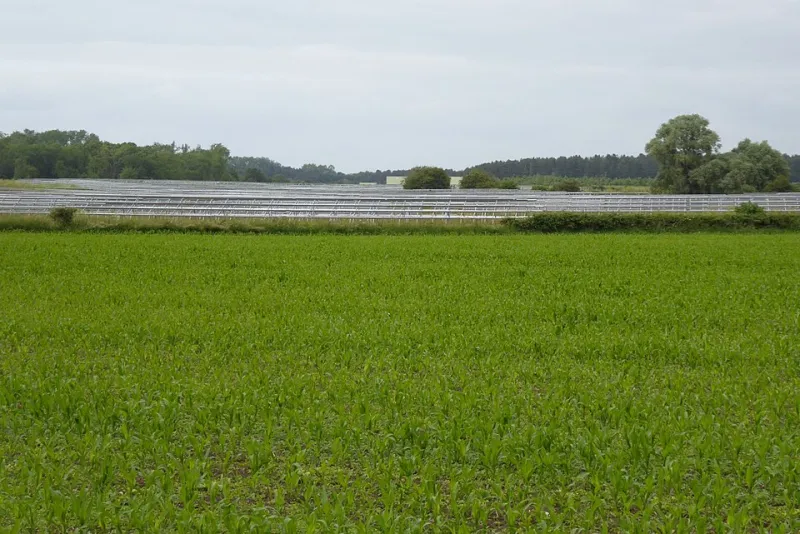
Photo: Philip Halling , CC BY-SA 2.0, via Wikimedia Commons
Washington state has positioned itself as a national leader in clean energy ambition. Legislators have passed sweeping climate legislation, utilities have pledged carbon-free portfolios, and the governor's office has repeatedly invoked the state's hydroelectric legacy as proof that bold energy transitions are achievable. Yet on the ground — in the agricultural flatlands of eastern Washington, on the wind-swept ridgelines of the Cascades, and in the utility corridors threading through suburban counties — a very different story is unfolding.
Clean energy projects are waiting. And waiting. And waiting.
For developers, regulators, and local officials who work inside Washington's permitting ecosystem, the problem is neither new nor mysterious. It is, however, politically inconvenient: the state's regulatory approval infrastructure was largely designed for an era when large-scale renewable energy was a theoretical aspiration rather than an operational necessity. The result is a system that can subject a mid-sized solar farm to review timelines exceeding three years, fragment approvals across a half-dozen agencies with overlapping and sometimes contradictory mandates, and leave project developers uncertain about which jurisdiction holds final authority over a given decision.
A Patchwork of Agencies, A Shortage of Clarity
Washington's permitting landscape for energy projects involves an unusually complex web of authorities. Depending on a project's size, location, and technology type, developers may need approvals from the Washington State Department of Ecology, the Energy Facility Site Evaluation Council (EFSEC), county planning departments, the Army Corps of Engineers, tribal consultation offices, and the Bonneville Power Administration, among others. Each entity operates on its own timeline, with its own procedural requirements and internal staffing constraints.
For projects that fall beneath EFSEC's jurisdictional thresholds — generally those generating less than 350 megawatts — no single coordinating body exists to harmonize the review process. Developers navigating this environment describe a sequential rather than parallel review structure, meaning approvals from one agency must often be secured before another will begin its own assessment. The compounding effect can be severe.
One eastern Washington solar developer, who requested anonymity to preserve ongoing regulatory relationships, described submitting an environmental impact application in late 2021 that remained under active review more than two years later — not because of substantive environmental concerns, but because the relevant county planning office lacked the staffing to process the volume of incoming applications. "The project is viable. The land is secured. The financing is ready," the developer said. "What we don't have is a clear path through the process."
Staffing Shortfalls and Institutional Inertia
That staffing problem is not incidental. As renewable energy investment has accelerated nationally — driven in part by federal incentives embedded in the Inflation Reduction Act — Washington's regulatory agencies have seen application volumes increase substantially without commensurate increases in reviewer capacity. Environmental regulators interviewed for this article acknowledged the strain, though several were cautious about characterizing it as a systemic failure rather than a resource allocation challenge.
"We are genuinely trying to process these applications as efficiently as the law allows," said one Department of Ecology official familiar with energy project reviews. "But we are also legally obligated to conduct thorough environmental review. Those two imperatives are sometimes in tension when the volume increases faster than our capacity."
Critics argue that institutional inertia compounds the staffing problem. Procedural frameworks that made sense for fossil fuel infrastructure — which required extensive environmental scrutiny given its pollution profile — are now being applied with relatively little modification to solar and wind projects whose environmental footprints are categorically different. The result, some argue, is a kind of regulatory symmetry that imposes similar burdens on projects with fundamentally dissimilar risk profiles.
Grid Modernization: The Invisible Bottleneck
While solar and wind permitting delays are visible and frequently discussed, a less examined dimension of the problem involves grid infrastructure itself. Renewable energy projects are only as viable as the transmission and distribution systems capable of carrying their output to consumers. In Washington, grid modernization — including new transmission lines, substation upgrades, and interconnection agreements with utilities — faces its own permitting gauntlet.
Interconnection queues managed by the Bonneville Power Administration have grown substantially in recent years, with some projects waiting years simply for a technical study to assess whether the grid can accommodate their output. Without that study, financing is difficult to secure. Without financing, construction cannot begin. The interconnection bottleneck, largely invisible to the public, may represent the single most consequential constraint on Washington's near-term renewable buildout.
Local officials in several counties with significant renewable development potential expressed frustration with the disconnect between state-level climate rhetoric and on-the-ground regulatory reality. "We want these projects," said one county commissioner from a central Washington jurisdiction. "They bring construction jobs, property tax revenue, and long-term economic activity to communities that genuinely need it. But we keep watching projects stall or relocate to other states because the process here is so unpredictable."
What Reform Could Look Like
Policy advocates and industry representatives have coalesced around several reform proposals, though legislative momentum has been uneven. Among the most frequently cited recommendations:
Concurrent review structures that allow multiple agencies to conduct their assessments simultaneously rather than sequentially, potentially compressing multi-year timelines to twelve or eighteen months without sacrificing substantive rigor.
Dedicated permitting staff for renewable energy projects, funded through application fees or legislative appropriation, to address the staffing shortfalls that currently create processing backlogs.
Tiered environmental review that calibrates the depth of analysis to the actual environmental risk profile of a given technology, rather than applying uniform standards developed for higher-impact energy infrastructure.
A single coordinating office with authority to convene and sequence the involvement of multiple agencies, providing developers with a reliable point of contact and a predictable decision timeline.
Some of these ideas have appeared in legislative proposals during recent sessions, though comprehensive permitting reform has yet to advance through both chambers. Competing priorities, agency resistance to jurisdictional consolidation, and genuine disagreement about how to balance environmental review integrity with development speed have all contributed to the stalemate.
The Cost of Delay
The consequences of inaction are not abstract. Every solar megawatt delayed is a megawatt that must be replaced — often by natural gas — in the near term. Every wind project that relocates to a state with a more predictable permitting environment represents not only a lost climate contribution but a lost economic opportunity for Washington's rural communities. And every year that grid modernization lags behind renewable development potential widens the gap between what Washington says it wants its energy future to look like and what it is actually building.
Washington has the resources, the political will, and the geographic endowment to be a genuine clean energy leader. What it currently lacks is a permitting infrastructure equal to that ambition. Closing that gap is not primarily a question of environmental values — it is a question of administrative capacity and political will. The state's climate goals are only as credible as the systems designed to realize them.