Ground-Level Governance: How Washington Communities Are Building Policy Power Without Olympia's Permission
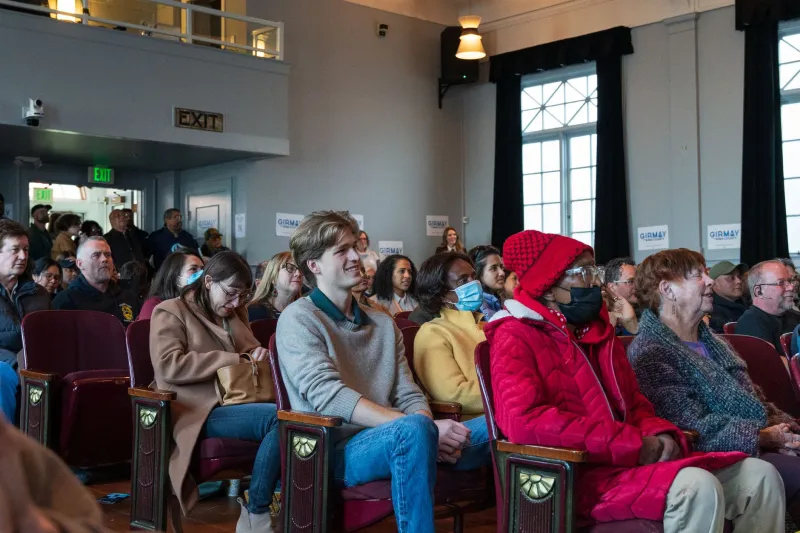
For civic advocates who have spent years watching promising legislation stall in Olympia — killed in committee, gutted by amendment, or simply never scheduled for a hearing — there is a growing recognition that waiting for the state legislature to act is not always the most productive use of political energy. Across Washington, a diverse set of communities has arrived at the same conclusion and begun acting on it, developing local policy innovations that are quietly reshaping daily life for thousands of residents without requiring a single vote in the state capitol.
These efforts are not uniform in their ideological orientation or their methods. What they share is a practical sophistication about the actual levers of local political power and a willingness to use them.
Tacoma's Participatory Budgeting Experiment
In 2022, the City of Tacoma launched a participatory budgeting pilot that gave residents in several neighborhoods direct authority to allocate a portion of city discretionary funds. The process was not the first of its kind in Washington — Seattle had experimented with similar mechanisms on a smaller scale — but Tacoma's implementation was notable for its deliberate focus on reaching residents who had historically been excluded from formal budget processes.
The city partnered with community organizations in neighborhoods with high concentrations of renters, recent immigrants, and residents with limited English proficiency to design an outreach process that went well beyond standard public comment periods. Multilingual community liaisons, evening sessions in neighborhood community centers, and an online participation platform accessible on mobile devices collectively expanded the pool of residents who engaged with the process.
The results, while modest in fiscal terms — the pilot allocated roughly $2 million across participating neighborhoods — were significant as a demonstration of what engaged local governance can look like. Participants prioritized investments in pedestrian infrastructure, community health resources, and youth programming that professional city staff had not identified as priorities in the same neighborhoods.
"What participatory budgeting does is make visible the gap between what experts think communities need and what communities actually experience as urgent," said a Tacoma city council member who championed the initiative. "That gap is real, and it matters."
Zoning as a Civic Tool in Spokane
On the eastern side of the Cascades, Spokane has emerged as an unlikely laboratory for land use reform. Facing a housing affordability crisis that has intensified as remote workers and cost-conscious migrants from more expensive West Coast cities have driven up prices, the city has moved aggressively on zoning changes that the state legislature has debated for years without resolution.
Spokane's 2023 comprehensive plan update included provisions permitting accessory dwelling units on virtually all residential parcels, allowing modest multi-family development in areas previously restricted to single-family housing, and streamlining permitting timelines for projects meeting affordability criteria. These changes did not require state authorization — they fell squarely within the city's existing land use authority — but they represented a degree of regulatory ambition that many larger Washington cities have been slower to pursue.
Local advocates attribute Spokane's relative boldness in part to the structure of its civic engagement process. The city's planning commission held more than thirty public sessions over two years, including sessions specifically designed to gather input from renters, young residents, and people experiencing housing instability — constituencies that traditional planning processes frequently underrepresent.
"When you actually hear from the people who are being priced out, it changes the political calculus," said a housing policy researcher who observed the Spokane process. "It's harder to defend the status quo when the people it's harming are in the room."
Tenant Protections at the City Level
Washington State law places significant constraints on cities' ability to enact rent control, but within those constraints, several municipalities have developed creative local tenant protection frameworks that provide meaningful stability for renters without running afoul of state preemption.
Bellingham, Olympia, and several smaller cities have enacted or expanded just-cause eviction requirements, notice period extensions, and relocation assistance mandates that go beyond what state law requires. In each case, local tenant advocates worked directly with city council members to draft ordinances, often bypassing the state legislative process entirely after repeated failures to advance similar measures in Olympia.
The Bellingham experience is instructive. After a state bill that would have established statewide just-cause eviction protections died in committee for the third consecutive session, a coalition of local tenant advocates shifted their attention to the city council. They documented local eviction patterns using publicly available court data, organized testimony from affected tenants, and presented the council with a draft ordinance developed in consultation with housing attorneys. The ordinance passed on a six-to-one vote.
"We stopped waiting for permission," said one of the lead organizers. "The city had the authority. We just had to make the case and build the political will."
The Blueprint: What Local Wins Have in Common
Across these varied examples, several strategic patterns emerge that distinguish communities that have successfully implemented local policy innovations from those that have not.
First, successful local campaigns typically begin with investment in community-controlled data. Rather than relying on state or federal data that may not capture local conditions with sufficient granularity, effective local advocates collect and present evidence that is specifically grounded in the community's lived experience.
Second, these campaigns consistently work to expand the definition of who counts as a legitimate participant in local policy processes. Standard public comment periods reach a relatively narrow slice of any community. The most effective local campaigns invest heavily in reaching residents who have historically been excluded — through language access, meeting format flexibility, and sustained outreach rather than single announcements.
Third, and perhaps most importantly, successful local campaigns treat city councils, county commissions, and school boards not as obstacles to be lobbied but as institutions to be transformed through sustained civic engagement. Several of the communities highlighted here have seen meaningful changes in the composition of their local governing bodies over the same period they have pursued policy innovation — a correlation that advocates describe as causal, not coincidental.
A Reorientation of Civic Energy
None of this is an argument that state-level politics do not matter. State law shapes the boundaries within which local innovation is possible, and those boundaries are real. But for Washington residents who feel that the distance between their civic aspirations and what Olympia produces has become too great to bridge through conventional legislative advocacy alone, the communities profiled here offer a different kind of political education.
Power, they suggest, is not simply held in one place and transferred from there. It is also built — incrementally, locally, and often in the spaces that formal politics has not yet learned to watch.