Chalk and Burnout: Inside Washington's Accelerating Teacher Retention Crisis
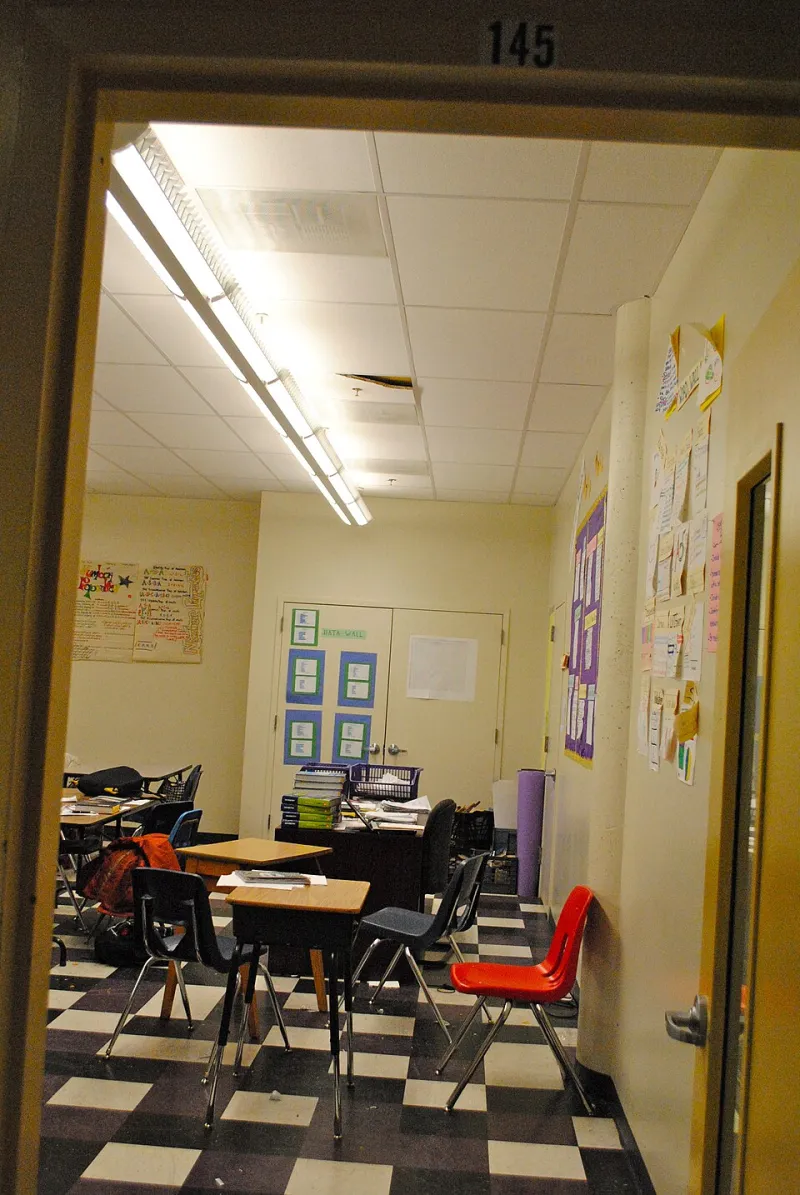
Photo: Medill DC, CC BY 2.0, via Wikimedia Commons
For seventeen years, Marcus Delgado taught eighth-grade science in the Yakima School District. He coached the robotics club, mentored first-year teachers, and, by his own account, rarely considered leaving. Then, in the spring of 2023, he submitted his resignation.
"It wasn't one thing," Delgado said in a recent interview. "It was every thing, all at once, and nobody in Olympia seemed to notice."
Delgado's departure is not an isolated incident. Across Washington State, public school districts are reporting educator attrition rates that outpace their capacity to recruit replacements. According to data compiled by the Washington State Institute for Public Policy and corroborated by the Washington Education Association (WEA), the state lost a net total of more than 2,400 classroom teachers between the 2021 and 2023 academic years — a figure that does not account for the substantial number of long-term substitutes and paraprofessionals who have also exited the profession.
The consequences are not abstract. They manifest in classrooms where a single teacher covers two subjects simultaneously, in rural districts where specialist positions in music, special education, and English language learning go unfilled for entire semesters, and in urban schools where high turnover undermines the continuity that student development requires.
A Wage Structure That No Longer Competes
At the center of the retention problem is a compensation structure that advocates argue has failed to keep pace with Washington's rising cost of living. The state's protracted legal and legislative battle over education funding — culminating in the McCleary decision and subsequent legislative responses — produced incremental salary improvements, but critics contend those gains have been eroded by inflation and outpaced by compensation in neighboring states and in the private sector.
The WEA reports that the average starting salary for a Washington public school teacher currently sits near $46,000 annually in many districts, with significant variation depending on local levy authority and collective bargaining outcomes. In the Seattle metropolitan area, where the median rent for a one-bedroom apartment exceeds $1,800 per month, that figure renders homeownership effectively inaccessible for early-career educators.
"We are asking people to hold advanced degrees, manage classrooms of thirty students, fulfill extensive compliance obligations, and do it all for a wage that qualifies them for rental assistance in the county where they work," said Kristine Ohlsen, a regional organizer with the WEA who represents educators in the Puget Sound corridor. "That is not a sustainable proposition."
School administrators, for their part, express sympathy but describe their hands as largely tied. Under Washington's current funding formula, the bulk of certificated staff compensation is determined through the state's salary allocation model, leaving districts with limited flexibility to offer competitive wages without drawing heavily on local levies — a mechanism that itself depends on voter approval and varies widely by community wealth.
Classroom Conditions Beyond the Paycheck
Compensation, while central, does not fully account for the breadth of the departure trend. Educators who have left the profession in recent years describe a convergence of conditions that collectively diminish the experience of teaching itself.
Amanda Trejo spent eleven years as a special education coordinator in the Spokane Public Schools system before transitioning to a role in private consulting in 2022. She describes the period following the COVID-19 pandemic as a turning point from which many of her colleagues never recovered.
"The behavioral challenges in classrooms intensified dramatically after the pandemic," Trejo explained. "The mental health needs of students increased. The paperwork requirements increased. The administrative expectations increased. But the staffing did not increase, and neither did the support."
Her account is consistent with findings from the Washington State Board of Education's 2023 educator workforce report, which identified workload intensification, insufficient mental health resources, and inadequate administrative support as primary non-compensation factors driving attrition. The report noted that special education, bilingual education, and early childhood specialists were departing at rates disproportionate to the broader teacher population — a pattern that concentrates harm among the students most dependent on specialized instruction.
The Rural Dimension
While the crisis is statewide, its geography is uneven. Rural districts in eastern Washington, the Olympic Peninsula, and the North Cascades region face compounding disadvantages: lower local levy revenues, geographic isolation that limits the candidate pool, and housing markets that, while cheaper than Seattle, offer fewer amenities that might attract younger professionals.
In Okanogan County, school superintendent Patricia Hale described a situation in which her district has resorted to emergency substitute certifications to fill vacancies that have persisted for multiple hiring cycles.
"We had a high school math position open for fourteen months," Hale said. "We interviewed three candidates in that entire time. One accepted and left after one semester. We are not competing with Seattle — we are competing with the idea of leaving education entirely."
State data indicates that rural districts now rely on emergency-certified instructors for approximately 8 percent of core academic positions, a figure that represents a threefold increase from pre-pandemic levels.
Legislative Proposals and Their Prospects
In response to mounting pressure from district administrators, union leadership, and parent advocacy organizations, several legislative proposals have advanced in recent sessions with mixed results.
House Bill 1876, introduced in the 2024 session, proposed a restructured compensation model that would establish regional cost-of-living adjustments to the state salary allocation formula — an approach that supporters argue would address the geographic inequities baked into the current system. The bill passed the House Education Committee but stalled on the floor amid concerns about its fiscal impact, estimated at approximately $380 million over four years.
A separate proposal focused on loan forgiveness for educators who commit to serving in shortage-designation districts for a minimum of five years drew broader bipartisan support and was partially funded through the state's workforce development budget. Critics, however, note that loan forgiveness addresses recruitment incentives without resolving the retention conditions that drive experienced teachers out.
WEA leadership has indicated that compensation reform will be a legislative priority in the 2025 session, with particular emphasis on mid-career salary progression, which union analysis suggests has flattened in ways that discourage long-term commitment to the profession.
What the Data Signals for Students
The downstream effects of educator attrition on student outcomes are difficult to isolate but impossible to dismiss. Research consistently demonstrates that teacher experience correlates with student achievement, and that high-turnover schools — disproportionately located in lower-income communities — suffer measurable learning disruptions each time a classroom changes hands.
Washington's Office of Superintendent of Public Instruction has acknowledged the connection in internal briefings, though public communications have been more measured. What is clear from available data is that the districts experiencing the highest attrition rates are also those serving the highest proportions of students from low-income households and students of color.
For Marcus Delgado, now working as a curriculum consultant for a regional educational nonprofit, the systemic dimension of the crisis is not lost.
"Every teacher who leaves takes years of institutional knowledge with them," he said. "The students who needed me most were the ones I had finally learned how to reach. That's not replaceable in a semester."
Whether the legislature moves with sufficient urgency to reverse the trend remains the defining civic question for Washington's public education system heading into 2025. The educators who remain in classrooms across the state are watching closely — and, according to survey data from the WEA, a significant portion of them are still weighing their options.